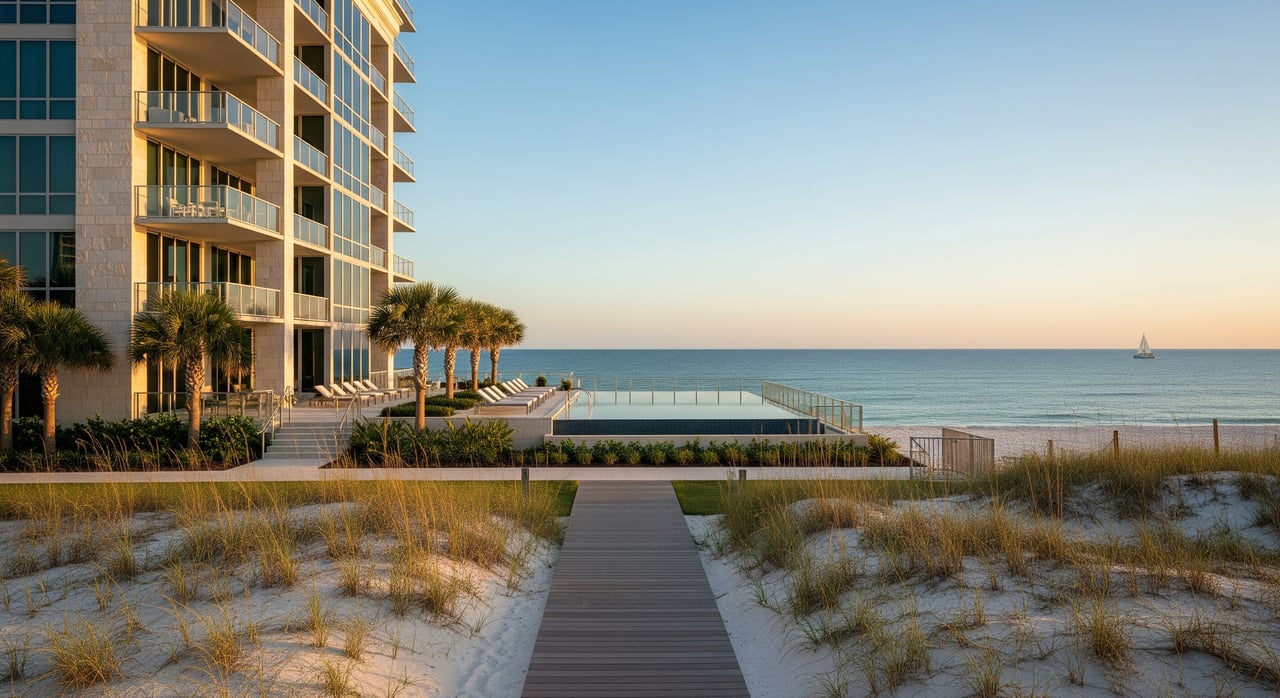
Thinking about a Panama City condo but keep hearing “non-warrantable” and wondering what it means for your loan? You are not alone. Many Bay County condos, especially waterfront buildings, face extra scrutiny that can change your financing path. In this guide, you will learn what non-warrantable means, why it happens in our coastal market, which loans still work, and the exact steps to get pre-qualified with confidence. Let’s dive in.
Warrantable vs. non-warrantable
A warrantable condo is one that meets the eligibility rules used by government-sponsored enterprises, mainly Fannie Mae and Freddie Mac. When a project is warrantable, you can usually access standard conventional loans with competitive rates and lower down payments. You can review these frameworks in the Fannie Mae Selling Guide and the Freddie Mac Single-Family Guide.
A non-warrantable condo is a project that fails one or more of those tests. In that case, conforming loans are typically off the table. You would then look at alternative financing such as portfolio loans, certain investor products, or cash. Thresholds and rules vary by program, so a project may qualify with one agency but not another.
What lenders review
Lenders do not just underwrite you as a borrower. They also underwrite the condo project. Common review items include:
- Owner-occupancy vs. investors and any single-entity owning too many units.
- HOA financials, reserves, and delinquencies in dues.
- Pending lawsuits or major unresolved litigation.
- Insurance coverage, especially wind and flood policies and deductibles.
- Building condition, deferred maintenance, or structural issues.
- Percent of commercial space and mixed-use elements.
You will see these factors referenced in the Fannie Mae Selling Guide and the Freddie Mac Single-Family Guide.
Why Panama City condos go non-warrantable
Bay County’s coastal setting brings unique pressure points. After storms, associations can face large insurance claims or higher windstorm deductibles, which can affect eligibility. Flood risk, especially for properties in FEMA flood zones, adds another layer of underwriting for insurance coverage. You can check a property’s flood zone at the FEMA Flood Map Service Center.
Other common reasons include high investor concentration, new or conversion projects that have not stabilized, significant HOA delinquencies, or visible deferred maintenance. Florida association governance falls under the Florida Condominium Act, Chapter 718, and lenders often examine budgets, reserves, and recent financial statements in line with those standards.
Financing options in Bay County
There is no single path that fits everyone. Here are the typical options that work when a condo is non-warrantable.
Portfolio loans
Portfolio lenders, such as some community banks, credit unions, and specialty lenders, keep loans on their own books. That gives them more flexibility with project issues than conforming programs. You can expect higher rates and fees than standard conventional loans, and down payments commonly start around 20 to 30 percent or more. Underwriting still reviews the association’s insurance, budget, reserves, and litigation, and you may need stronger personal reserves.
In Bay County, lenders familiar with coastal projects often understand wind and flood insurance nuances, special assessments after storms, and project documentation. Ask any prospective lender about their timeline to review the association packet and whether they have recently approved similar Panama City condos.
DSCR loans for investors
If you are buying primarily for rental income, a DSCR loan evaluates the property’s cash flow relative to its debt service, rather than relying on traditional W-2 income. Many DSCR programs accept non-warrantable projects if the rental numbers work, though some still have condo-specific overlays.
Typical features include reduced personal income documentation, DSCR thresholds commonly around 1.0 to 1.25 or higher depending on the lender, and down payments of roughly 20 percent or more for investment properties. Confirm HOA rental rules and any city or county guidelines before you count on short-term rental income.
FHA and VA options
FHA and VA maintain their own condo approval processes. If a project is FHA or VA approved, you may be able to use those programs even if conventional GSE financing is not available. Many associations do not pursue these approvals due to the administrative effort, and storm-related issues can affect eligibility until corrected. You can learn how FHA evaluates condos in the FHA condo approval guidance.
Cash or private money
Cash avoids financing constraints altogether, but you should still review title, insurance, and any pending or potential assessments. Private lenders may finance non-warrantable condos for short terms at higher rates and with larger equity requirements.
What non-warrantable means for your deal
- Pricing and costs: You will likely see higher interest rates, larger down payments, and limited lender choices.
- Approval time: Lenders need to review HOA documents. Allow extra time for the association questionnaire, insurance pages, budgets, and meeting minutes.
- Resale: The buyer pool can be smaller since some buyers rely on conforming loans. That can affect pricing strategy if you plan to sell later, though strong demand for waterfront locations can still support values when buyers understand the financing path.
Step-by-step pre-qualification checklist
Use this checklist to prepare early and reduce surprises.
- Engage the right lender early
- Choose a lender or broker with recent approvals in Bay County condo projects. If you are an investor, ask about DSCR or portfolio options.
- Gather association documents
- Request the HOA budget, audited financials, and reserve study.
- Get recent board meeting minutes, a dues delinquency summary, and details on any litigation or special assessments.
- Collect the master insurance declarations for property and wind, and confirm flood requirements.
- Review condo declarations, bylaws, and rules to confirm rental restrictions and leasing terms.
- Ask for a project questionnaire
- Your lender may use Fannie or Freddie forms or their own questionnaire. Get it to the association early, since responses can take time.
- Prepare your borrower file
- Standard loans: credit report, pay stubs, W-2s, tax returns, and bank statements.
- DSCR loans: market rent evidence, rental comps, or a lease. Personal income documentation may be reduced depending on the program.
- Budget for higher equity and reserves
- Plan for 20 to 30 percent down or more and expect tighter reserve requirements. Closing costs can be higher for specialty programs.
- Line up insurance and inspections
- Get quotes for hazard, wind, and flood coverage early to nail down monthly costs. For waterfront units in flood zones, consider an elevation certificate to estimate flood premiums.
- Confirm rental and local rules
- Check HOA rules for short-term rentals and any city or county guidelines that affect rental activity or waterfront improvements.
- Model multiple scenarios
- Compare payments at different down payments and rates across portfolio and DSCR options. If you need help running scenarios, reach out to The Gene Team for data and local lender referrals.
Local tips for waterfront condos
- Flood and wind: Many coastal buildings sit in special flood hazard areas, and association wind deductibles can be high. Review the flood zone at the FEMA Flood Map Service Center and ask for full insurance declarations.
- HOA health: Review reserves, any special assessments, and evidence of ongoing maintenance planning under the Florida Condominium Act, Chapter 718.
- Insurance market: Florida insurance availability and pricing change over time. For market context, explore the Florida Office of Insurance Regulation resources and build cushion into your monthly budget.
How The Gene Team helps
You deserve a clear roadmap, not guesswork. As Panama City Beach condo specialists, The Gene Team pairs local knowledge with investor-minded service. You get guidance on which buildings typically pass or fail lender reviews, introductions to lenders who actively finance Bay County condos, and insurance referral options so you can dial in total monthly costs. If you plan improvements after closing, the team can connect you with trusted vendors and coordinate post-sale rehab.
Whether you want a family retreat or a cash-flowing rental, we help you line up the right financing path, the right unit, and a smooth closing timeline. Ready to explore the best options for your budget and goals? Contact The Gene Team to get started.
FAQs
What makes a condo non-warrantable in Panama City?
- Lenders often flag high investor ratios, HOA delinquencies, litigation, weak reserves, or elevated wind and flood deductibles. See the Fannie Mae Selling Guide for a framework.
Can I use FHA for a non-warrantable condo?
- Only if the project is FHA approved or qualifies under limited exceptions. Review the FHA condo approval guidance to understand requirements.
How big is the down payment on non-warrantable loans?
- Many portfolio and investor loans require 20 to 30 percent or more, depending on your credit, the building, and the lender.
Do DSCR loans work for short-term rentals?
- They can, but you need to confirm HOA rental rules and local ordinances. Lenders will look for realistic rent comps and occupancy assumptions.
How long does approval take with a portfolio lender?
- Timelines vary. If the lender knows the project and the association responds quickly to questionnaires, approvals can be faster. Complex insurance or litigation issues can add time.