A buyer closes on a $2 million cottage in Rosemary Beach, wires the funds, signs the last page, and assumes the expensive part is over. Then the mail starts. A transfer fee invoice. A note from the Property Owners Association about an approved paint palette. A contractor quote that runs 20 to 30 percent higher than the same job would cost two towns over. None of it was a surprise, exactly. It was all disclosed somewhere in the closing package. It just wasn't priced into the number the buyer had been mentally budgeting against for six months.
That's the pattern worth understanding before you write an offer here. The list price on a Rosemary Beach home is the least informative number in the transaction. The real cost structure sits underneath it, in a design code that governs almost everything you can see from the street, and it doesn't show up until you're already committed.
The Fee That Shows Up At The Table
Rosemary Beach charges a transfer fee of 1 percent of the purchase price, paid by the buyer at closing. On a $2 million home, that's $20,000 due the same day as your down payment, on top of standard title and lender costs. It funds the Property Owners Association's reserves rather than any single seller or agent, which is why it applies to every resale rather than being something you can negotiate away in an offer.
If the property is new construction or you're planning a major renovation, add a separate capital contribution fee, typically ranging from $5,000 to $25,000 depending on project scope. This one isn't automatic on every closing. It triggers when you're building or substantially altering, which means a buyer who plans to gut a kitchen in year one should be pricing that fee into the renovation budget, not treating it as a line item that appears out of nowhere later.
What Happens When You Want To Change Anything
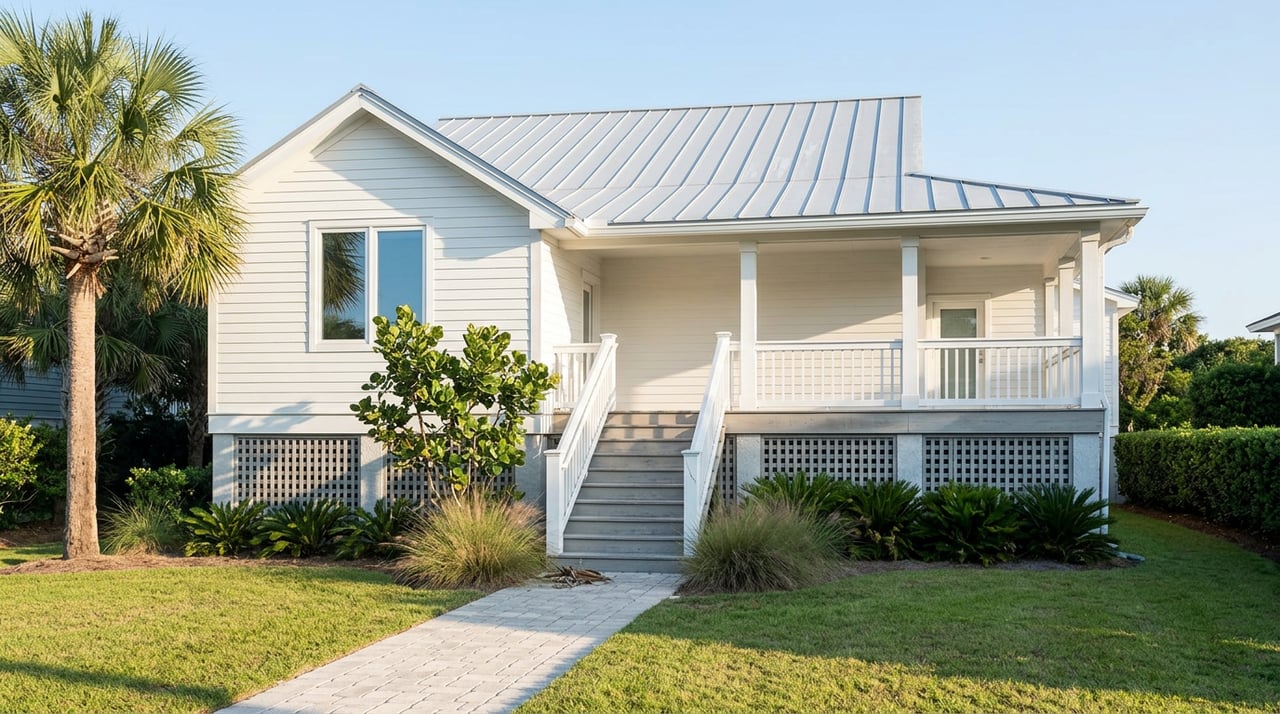
Rosemary Beach was planned in 1995 by the Rosemary Beach Land Company under Patrick Bienvenue, with the master plan drawn by Andres Duany and Elizabeth Plater-Zyberk, the husband and wife team behind Seaside. Construction restricts every lot to one of twelve codified building types, among them the Cottage, the Rear Yard House, the Courtyard House, the Tower House, and the Carriage House, each with its own setback rules and architectural parameters. A buyer who assumes ownership means design freedom will find out otherwise the first time they try to add a pool cabana on a lot zoned for a Cottage.
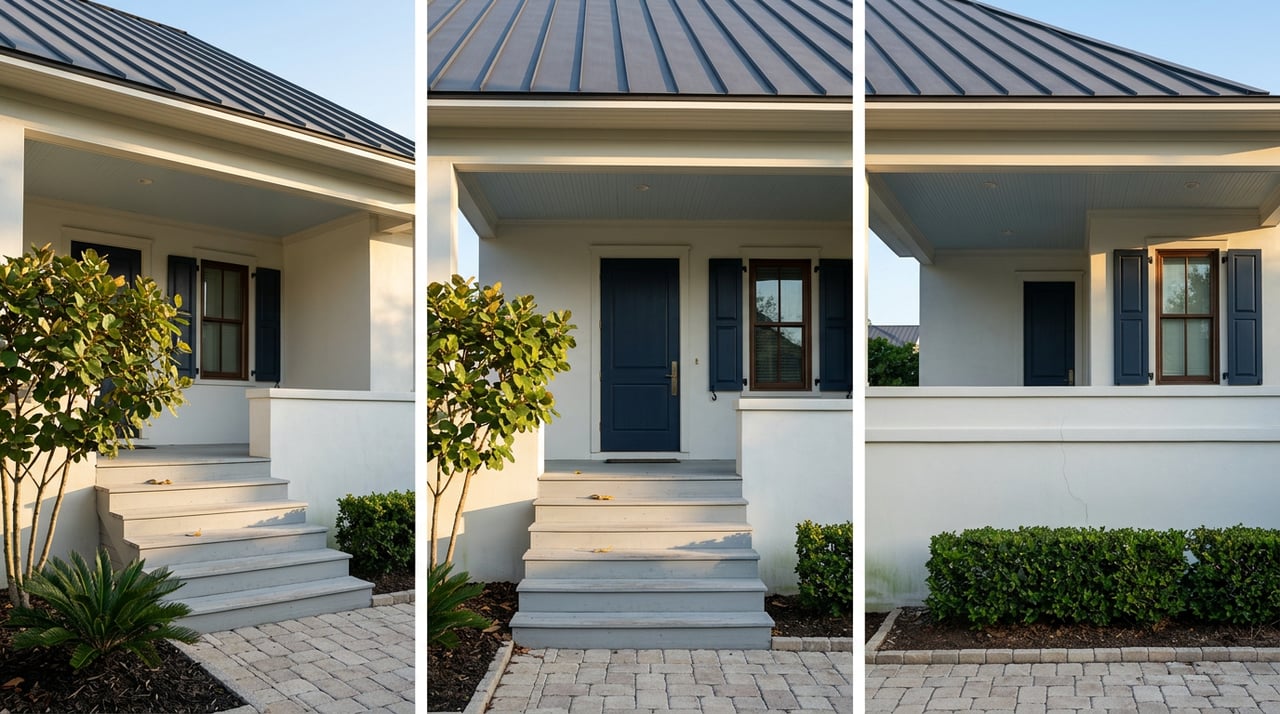
The Architectural Review Board oversight extends further than most buyers expect. Repainting a house the same color it already is still requires submittal. So does replacing a front door or adding a window box, and those small jobs typically run $500 to $1,500 in architectural drawing fees before anyone picks up a hammer. A larger renovation that needs engineered drawings can accumulate $15,000 to $35,000 in design and compliance costs before construction starts. This is the design code that keeps Rosemary Beach looking the way it does in every photograph. It's also a recurring cost center that never fully turns off, and it's part of why local tradespeople charge more here than in surrounding communities: narrow alleys, limited parking, and ARB documentation requirements all add friction to a job that would be simpler somewhere without a design code.
The Town Is Actively Staffing This Right Now
If the design code sounds like a rulebook that might have gone soft over the years, it hasn't. Rosemary Beach's Property Owners Association put out a formal solicitation in early 2026 for a part-time Town Architect, the licensed professional responsible for reviewing architectural applications, verifying compliance on site visits, and resolving design disputes. Proposals were due to Town Manager Lee Nettles by March 31, 2026. That's not a sign of a program winding down. It's a sign the enforcement layer is being actively staffed and reinforced this year, which matters if you're weighing how much latitude you'll actually have on a future renovation.
Insurance Doesn't Round Up To The List Price Either
Standard NFIP flood coverage caps out at $250,000 for the structure and $100,000 for contents, which is well short of what a Rosemary Beach home is actually worth. Owners in the $1.5 million to $3 million range typically carry $12,000 to $25,000 a year in combined wind and flood coverage once private layers are added on top of the federal minimum. That's an annual number, not a one-time closing cost, and it belongs in the same conversation as the mortgage payment when a buyer is running affordability math.
As of spring 2026, listings in the 32461 zip code, which covers Rosemary Beach, carried a median list price of $1.799 million and spent a median of 100 days on market. Walton County as a whole has been described as behaving like a buyer's market. Rosemary Beach's own numbers sit at the high end of both price and time on market, which tracks with everything above. A property with a heavier compliance and insurance load doesn't move as fast as a comparable home without one, even in a market that otherwise favors buyers.
If The Plan Is To Rent It
Short-term rentals are allowed in Rosemary Beach, but the rules stack in layers. The HOA typically requires minimum stays of seven nights during summer peak season and three to five nights in the off-season, with occupancy caps enforced by bedroom count and fines of $500 to $1,000 per violation, though exact terms vary by property and deed restriction.
On top of that, Walton County requires its own annual Short-Term Vacation Rental Certificate, currently priced around $300 per property, alongside a Florida DBPR license running roughly $50 plus per-unit fees. The county's certification program has moved from a rollout phase into active enforcement, and 2026 has brought a shift from warnings to legal proceedings against operators without valid certificates, with fines that can reach $500 per day. The renewal calendar itself is changing too: properties outside the Santa Rosa Beach zip code, which includes Rosemary Beach, move to a unified June 1 renewal deadline starting with the 2026-2027 cycle. An investor buyer who assumes the HOA rules are the only rules they need to satisfy is missing an entire second layer of county compliance that carries its own deadlines and its own penalties.
What This Means If You're Actually Under Contract
None of this is a reason to walk away from Rosemary Beach. It's a reason to ask for the right documents before you're past your inspection contingency. Request the seller's ARB approval history so you know what's been permitted and what hasn't. Confirm which of the twelve building types the lot is assigned to before you assume you can add a carriage house or expand a footprint. Get the HOA's written statement on minimum stay rules and any fines history if a rental strategy is part of your plan. And if you're an existing owner weighing whether a $15,000 renovation is worth doing before you sell, it helps to know what the home is worth today, before you start layering capital costs on top of it.
The design code is the reason Rosemary Beach holds its value and its curb appeal year after year. It's also the reason the sticker price was never the whole story. Buyers who go in with both halves of that picture close with fewer surprises, and they negotiate from a stronger position when they already know what the seller's compliance history looks like.
A Few Questions Worth Asking Before You Sign
Does the 1 percent transfer fee apply to every resale, or only certain properties? It applies broadly to resales in Rosemary Beach and is paid by the buyer at closing. Confirm the exact figure with the POA before you finalize your closing cost estimate, since it's calculated as a percentage of purchase price rather than a flat amount.
Can I skip ARB approval if I'm repainting the exact same color? No. Submittal is required even for like-for-like color changes. Budget the time and the modest drawing fee into your renovation timeline rather than assuming a repaint is a weekend project.
Is the capital contribution fee negotiable in an offer? It's tied to the scope of new construction or major renovation rather than the sale itself, so it isn't something a seller can waive on your behalf. It's worth confirming early whether your planned project will trigger it and at what estimated amount.
If you're weighing a purchase in Rosemary Beach and want a straight answer on what a specific lot allows, or you're an owner trying to decide whether a renovation pencils out before you list, The Gene Team can walk through the numbers with you. Start with a free home valuation or browse current Rosemary Beach listings to see what's on the market right now.