What if the biggest decision in Rosemary Beach is not the square footage, but how the home is designed to shape your daily life? That question matters here because Rosemary Beach is not a typical beach neighborhood with wide setbacks and car-first streets. If you are thinking about buying in this part of Walton County, understanding the town’s architecture can help you choose a property that truly fits how you want to live, host, and relax. Let’s dive in.
Rosemary Beach Design Starts With the Town
Rosemary Beach was planned as a walkable New Urbanist community, and its development, construction, and maintenance are guided by a code. That means the homes are designed to work together as part of a pedestrian coastal town rather than as isolated houses on separate lots.
You will see architectural influences tied to Caribbean, West Indies, and other Southern coastal traditions. The result is a community with strong visual consistency, even though individual homes can still feel distinct. In practical terms, that gives buyers a setting with a clear identity instead of a mix of unrelated styles.
The town layout also shapes how you move through the area. Meandering paths and boardwalks connect homes to Town Hall, the Post Office, green spaces, restaurants, shops, and other businesses. That layered layout is one reason Rosemary Beach often feels more like a compact town than a standard coastal subdivision.
Key Architecture Features You Will Notice
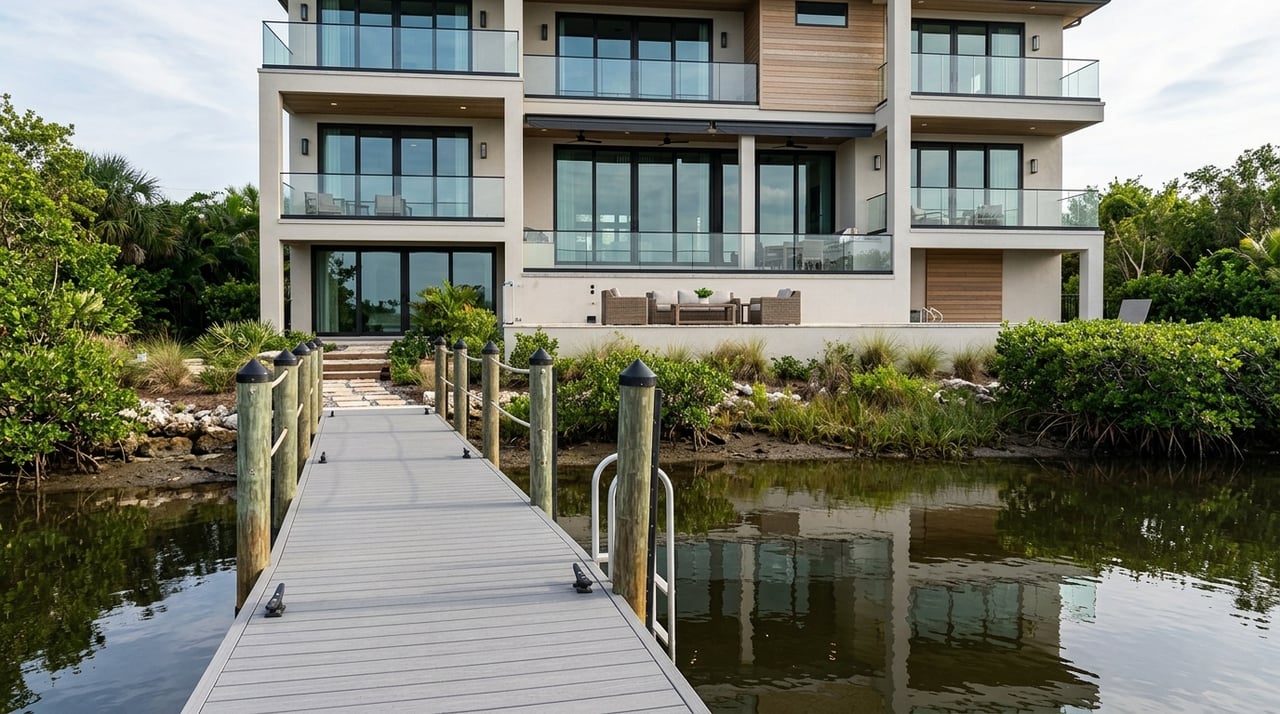
Rosemary Beach homes often share a few defining materials and design elements. Community information describes wood siding, cedar shingle, and true stucco masonry, along with metal or shingle-shake roofs.
You will also notice deep eaves, high ceilings, porches, and shuttered openings. These are not just decorative choices. They are part of the way the homes are meant to provide shade, support airflow, and make outdoor spaces feel like an extension of the interior.
For you as a buyer, that means the architecture affects comfort as much as appearance. A porch, courtyard, or upper-level opening may have a real impact on privacy, breeze, and how often you use the outdoor areas.
Common Home Forms in Rosemary Beach
Courtyard Homes
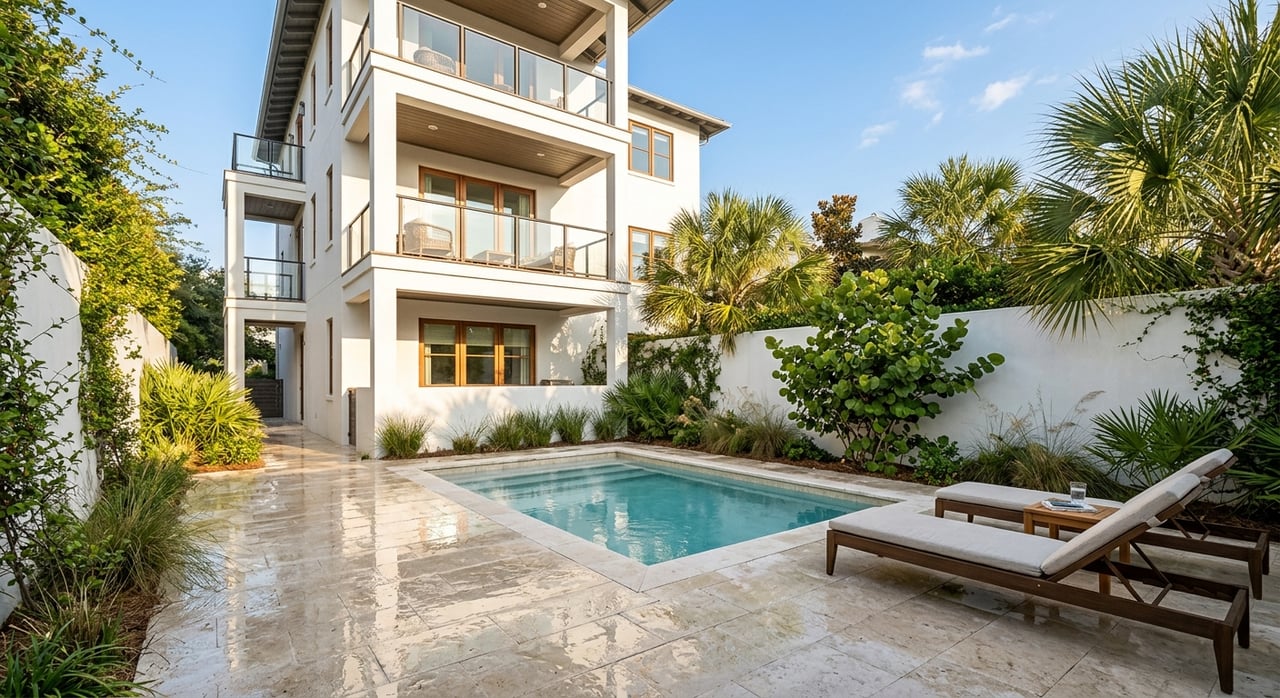
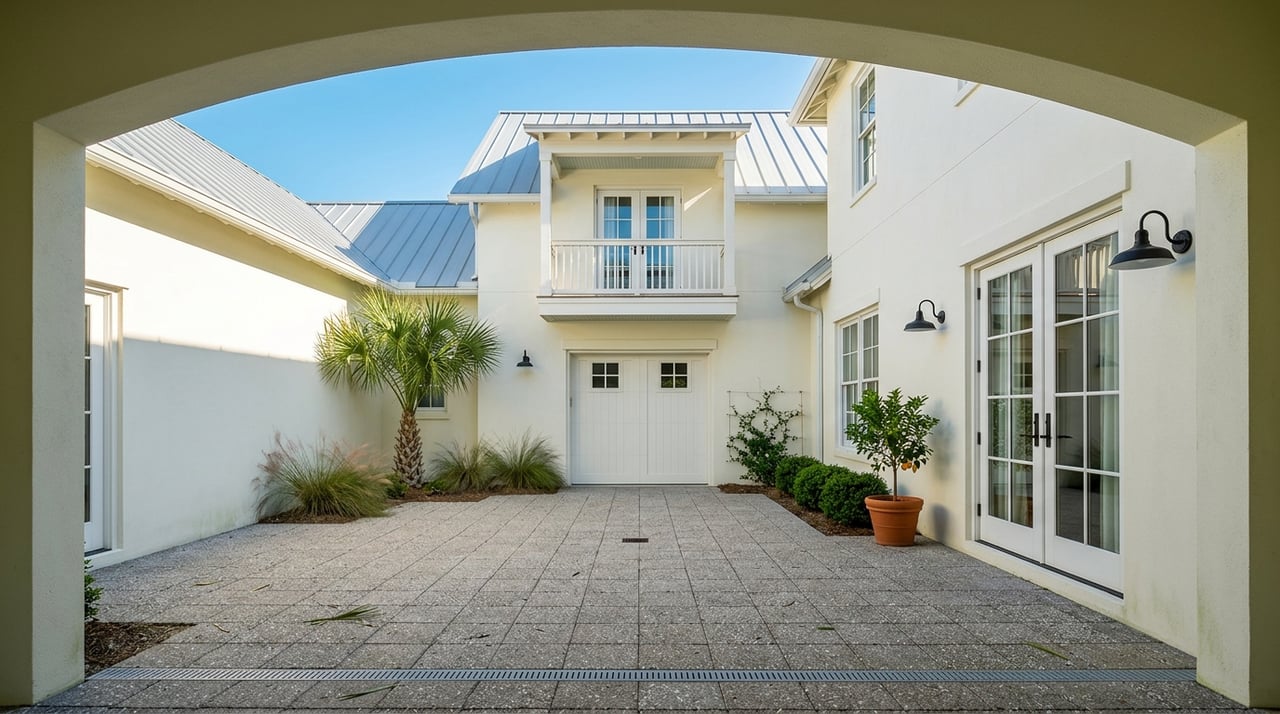
Courtyard homes are one of the clearest examples of Rosemary Beach’s outdoor-living focus. Gardens, fountains, and enclosed outdoor spaces are often treated as true living areas rather than leftover yard space.
If you want a more private place for dining, lounging, or a pool, a courtyard layout may be especially appealing. In many cases, it offers a more sheltered outdoor experience than an open backyard would.
Boardwalk-Linked Cottages
Many homes face boardwalks, pathways, or shared lawn spaces instead of broad front yards. Car access is often handled from rear alleys, which keeps the front of the home oriented toward people rather than vehicles.
This can create excellent walkability and a strong sense of connection to the town. At the same time, your front-facing spaces may feel more public than they would in a suburban neighborhood, so it is worth thinking about how much activity you want near your entry and porch.
Carriage Houses
Carriage houses are a flexible feature that many buyers appreciate. They were introduced alongside the alley system and can add living space, hidden parking, and potential rental opportunity.
Depending on the property, you might use a carriage house as guest space, a private office, a secondary suite, or room for extended stays. If flexibility matters to you, this can be one of the most valuable parts of the home. Some smaller setups may use tighter stair designs, so you will want to check accessibility carefully.
Town Center Buildings
Homes near the Town Center offer a different lifestyle than homes in quieter pockets of Rosemary Beach. The Town Center brings together shopping, dining, civic uses, and green space in a walkable core.
If you want to step out and be close to activity, this location can be a major plus. If you prefer the quietest possible setting, you may want to focus on homes farther from the center. In Rosemary Beach, location within the community matters just as much as the architectural style itself.
Buyer Considerations Beyond Style
Privacy and Openness
Rosemary Beach architecture is intentionally open and street-facing. Homes are also more tightly knit than what many buyers expect in a conventional subdivision.
If you prefer deep setbacks, large side yards, or a more buffered feel, pay close attention to orientation and enclosure. In this community, privacy often comes from courtyards, porches, shutters, and upper-level spaces instead of lot width.
Light and Airflow
The same design language that can make homes feel more connected to the public realm can also make them feel bright and airy. Openings, porches, and architectural shading are meant to support daylight and breezes.
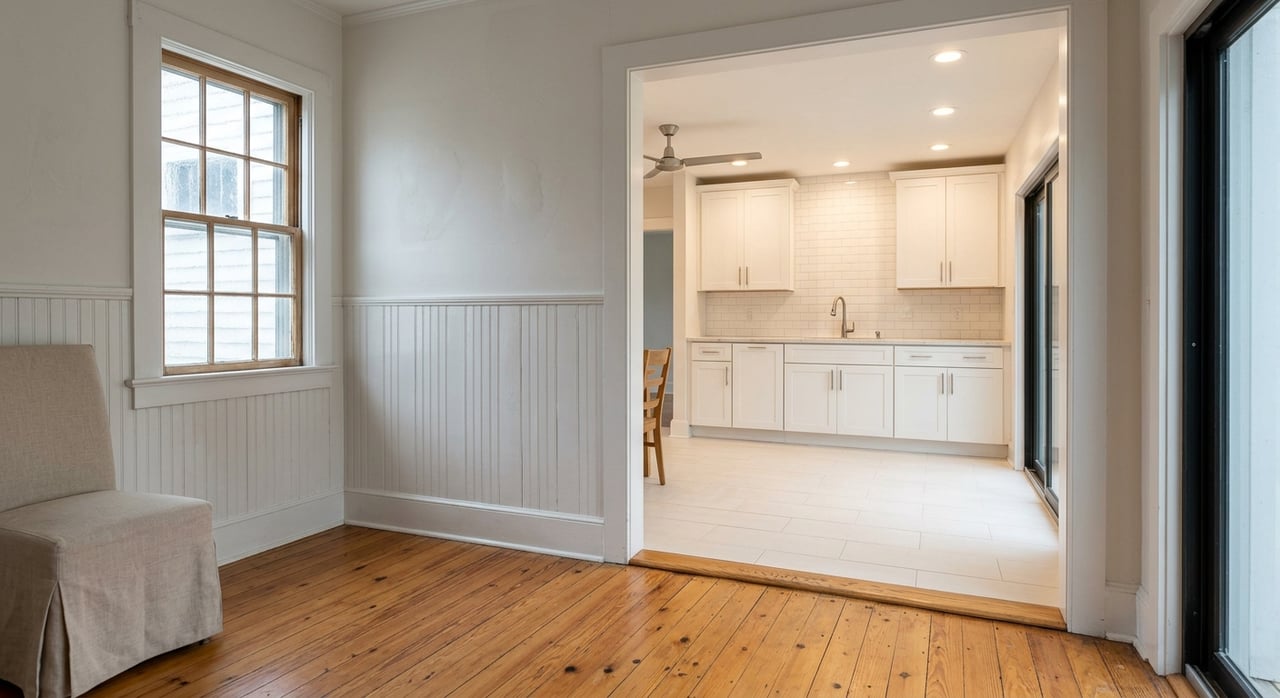
When you tour a property, notice how sunlight moves through the home and how outdoor areas connect to indoor rooms. A house that looks similar on paper can live very differently depending on its layout and exposure.
Outdoor Living
Rosemary Beach is built for daily outdoor use. The community layout puts the beach, Town Center, swimming pools, tennis courts, and other amenities within walking distance.
The dune walkover system is also a major part of how the town connects residents and guests to the shoreline while protecting it. There are nine walkovers in the community, and two are wheelchair accessible with restrooms. If beach access and a walkable lifestyle are high on your list, this is worth weighing alongside the home itself.
Materials and Maintenance
Authentic coastal materials add character, but they also require attention. Wood siding, cedar shingles, stucco masonry, and metal roofing each come with maintenance needs in a salt-air environment.
FEMA notes that salt spray and moisture can speed up corrosion near ocean shorelines, especially on hardware and fasteners. For you as a buyer, that means it is smart to review the condition and maintenance history of exterior wood, balconies, roof edges, and metal components.
Parking and Vehicle Rules
Cars are intentionally pushed to rear alleyways in Rosemary Beach. The community also bans golf carts, low-speed vehicles, ATVs, motor scooters, and similar off-street vehicles.
Because of that, parking setup matters more than some buyers first realize. Garage count, driveway space, and guest parking logistics can have a real effect on convenience, especially during busy seasons or when hosting visitors.
Flood and Storm Planning
Walton County provides flood information tools, and the county’s floodplain manager can determine a parcel’s flood status. The county also requires development order and permit documentation for work in special flood hazard areas, including elevation documentation.
The county notes that flood insurance should be considered even outside mapped high-risk zones because flooding can occur anywhere. If you are comparing homes or considering future updates, this is an important part of your due diligence.
Stairs and Accessibility
Some smaller Rosemary Beach units may use alternating tread stairs when a full stair run will not fit. That detail can be easy to miss in listing photos.
If your household includes young children, older adults, or anyone with mobility concerns, check the floor plan and vertical circulation closely. A charming design feature may not be the right functional fit for every buyer.
What To Verify During a Home Tour
When you walk a property in Rosemary Beach, try to look beyond finishes and décor. The way the home sits in the town can affect your daily experience as much as the bedroom count.
Use this checklist to stay focused:
- How does the home face: boardwalk, courtyard, street, or green space?
- Is the outdoor area truly private, or is it mostly a front-facing porch?
- How many garage and driveway spaces are available?
- What guest parking or pass arrangements apply?
- What exterior materials were used?
- What maintenance has been completed on wood, masonry, metal, roofing, and balconies?
- If you plan to renovate, what code review and Walton County flood documentation may be required?
How To Match a Home to Your Lifestyle
The best Rosemary Beach purchase is often the one that matches your routine, not just your visual preferences. A buyer who wants easy walkability and active surroundings may love a home near the Town Center, while a buyer focused on quieter outdoor living may prefer a courtyard-oriented property in a less active location.
It also helps to think through how you will actually use the property. If you host often, a carriage house or sheltered courtyard could matter more than a larger interior footprint. If low-maintenance ownership is a priority, exterior materials and upkeep history deserve close attention.
In other words, the smartest question is not only, “Do I like this house?” It is also, “Does this layout support the way I want to live in Rosemary Beach?”
If you want help comparing Rosemary Beach homes, understanding lot orientation, or weighing buyer tradeoffs across 30A, the team at The Gene Team is here to help you follow up with clarity and follow through with confidence.
FAQs
What architectural styles define Rosemary Beach homes?
- Rosemary Beach homes are shaped by a code-driven design language influenced by Caribbean, West Indies, and Southern coastal architecture, with features like porches, deep eaves, shutters, wood siding, cedar shingles, stucco masonry, and metal or shingle-shake roofs.
What should buyers know about privacy in Rosemary Beach?
- Because homes are often open, street-facing, and closely arranged, privacy usually comes from courtyards, porches, shutters, and upper-level spaces rather than large yards or deep setbacks.
What should buyers check about parking in Rosemary Beach?
- Buyers should verify garage count, driveway space, and guest parking details because cars are routed to rear alleys and golf carts, low-speed vehicles, ATVs, motor scooters, and similar off-street vehicles are not allowed.
What should buyers inspect about Rosemary Beach exterior materials?
- Buyers should review the condition and maintenance history of wood siding, cedar shingles, stucco, balconies, roof edges, and metal hardware because coastal salt spray and moisture can increase wear and corrosion.
What flood considerations apply to Rosemary Beach homes in Walton County?
- Buyers should confirm a property’s flood status with Walton County tools or the floodplain manager and review any permit, development order, or elevation documentation that may apply, especially for work in special flood hazard areas.
What accessibility issue can appear in some Rosemary Beach homes?
- Some smaller units may have alternating tread stairs, so buyers should verify stair design and overall floor plan function if mobility, age, or child safety is a concern.